So you’ve been flying your entry-level wing (Safire 4, Safire 3, Sabre 3, Pulse, Silhouette, or any equivalent), and building experience and getting more confident under canopy, and now you’ve started eyeing the Crossfire 3.
The Crossfire 3 takes things up a notch, delivering a more responsive, dynamic flight for experienced pilots ready to explore more performance with their wing.
Here’s what actually changes when you move from an entry-level wing like the Safire 4 to a Crossfire 3. And just as important, how you tell the difference between “ready” and “just bored of your current wing.”
What’s Ahead
- Safire 4 → Crossfire 3: What actually changes?
- What Does the Crossfire 3 Feel Like?
- Does It Hold Up Long-Term?
- Are You Actually Ready for It?
- What changes when you move from a wing like a Safire 4 to a Crossfire 3
- FAQ: What People Ask About the Crossfire 3
- Demo a Crossfire 3
Safire 4 → Crossfire 3: What actually changes?
| Safire 4 | Crossfire 3 | |
|---|---|---|
| Design | 9-cell canopy with a 0.83 (light) taper ratio* | 9-cell canopy with a 0.75 (medium) taper ratio* |
| Pilot | Building skills and confidence | Confident intermediate-advanced |
| Inputs | Responsive, predictable & forgiving | More responsive, dynamic & input driven |
| Speed & Dive | Fun & controlled | More dive, speed and energy |
| Recovery | Quick recovery arc from turns and dives | Significantly longer recovery arc |
| Flare | Powerful & progressive with plenty of range | Powerful, predictable with more energy in the landing |
| Overall feel | Refined performance you can grow into | A clear step up into more performance-focused flying |
The Crossfire 3 is more responsive, dives harder and carries a longer recovery arc than the Safire 4. It’s built for pilots who know their Safire 4 (or similar wing) inside out: they’re landing accurately and consistently, starting to play with risers for turns up high and are ready to push further.
*What’s ‘Taper’?:
You’ll notice we said “taper”, not “elliptical.” For the last 20 years, chat about wing design used the terminology “elliptical” — semi, fully, whatever it may be. “Taper” is the terminology we’re using now. Nothing about the wing changed; we’re just making our language as accurate as possible. Taper ratio measures how much a canopy narrows from centre to tip. For example, a Safire 4 sits around 0.83 (lightly tapered), while the Crossfire 3 drops to 0.75 (medium tapered…or what you’d have called “semi-elliptical” yesterday).
Want the full nerd-out on shapes and what they actually do? Guide to the Different Canopy Types.
What Does the Crossfire 3 Feel Like?
MEET LEAH
-

- Leah, frothin’ on a head down jump.
In a world full of highlight reels and trending music, Leah’s page is the real deal. No filters, just genuine brain dumps and learnings, ‘unsolicited advice nobody asked for ‘(but you need), and a passion to grow the sport and self.
Follow:  @leahelisabet
Leah’s canopy progression has taken her through everything from a Pulse 170 and Safire 2 149 to Sabre 2 135 and 120s. After hundreds of jumps and plenty of time figuring out what she did (and definitely didn’t) want from a canopy, curiosity eventually led her to demo a Crossfire 3.
“I quite literally screamed under canopy the first time I flew it because I loved it so much…”
What made you start thinking about something different?
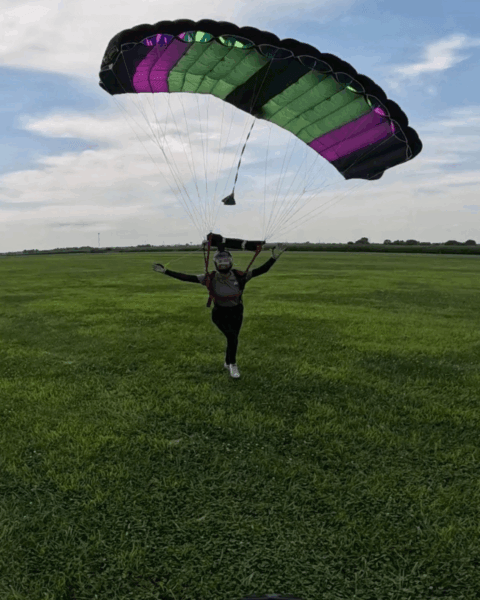
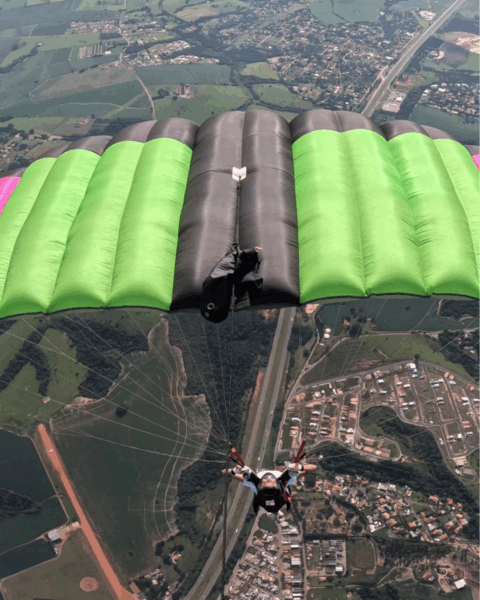
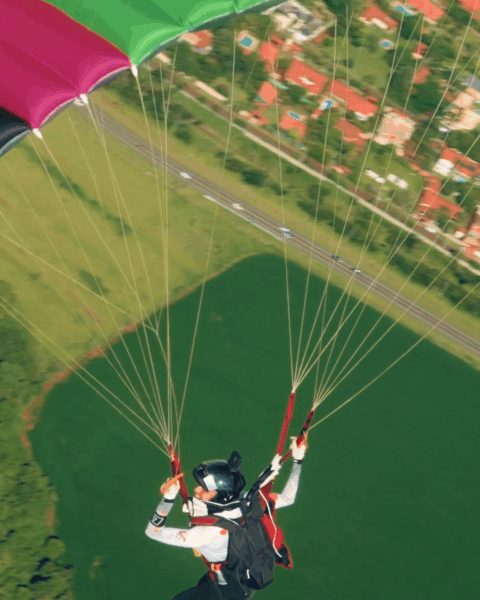
So my first jump on a crossfire was the 119 I demo’d. Everyone had told me it had more sensitive harness turns due to being semi elliptical, but I wasn’t expecting it to be that sensitive due to low windload.
What stood out on that first jump?
Firstly, the opening was *CHEFS KISS*. It was such a smooth opening I almost cried after 2-3 years of whiplash openings haha. And flying it was so fun as it finally felt like I had a canopy that actually responded to me. I often describe it as I’d previously felt like I was flying a square; now I felt like I was flying an oval/circle. This was the first canopy I really felt like I was flying the canopy and enjoying it, and the landing felt predictable.
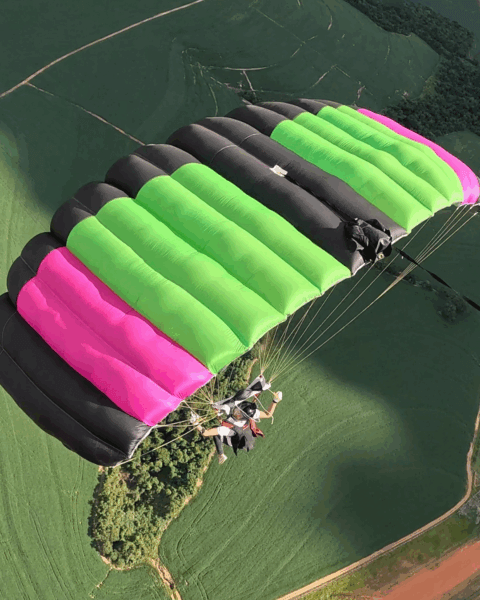
That one demo jump quickly turned into the birth of Rosemary, Leahs beautiful Crossfire 3 109 new canopy, and a whole new appreciation for the canopy part of the jump.
“You couldn’t pay me to switch canopy. ROSEMARYYY 💚🩷🖤💙”
How did the transition compare with what you expected?
Significantly better.
As a lighter person, I’d more or less subscribe to the idea that as a light person with a joke of a wingload, no canopy would feel good unless I downsized considerably (which I didn’t want to do). I’d given up on the idea of enjoying flying my canopy.
Relatable? Check out our Wing Loading Calculator
How has your relationship with canopy flight changed since moving to the Crossfire?
The Crossfire completely changed that belief for Leah:
I actually enjoy it now. Genuinely. I’ve enjoyed my previous canopies but something clicked on another level when switching to the Crossfire.
I started doing more hop-and-pops and high pulls purely to fly my canopy, which is something I never would have wanted to spend money on before.
Also, I no longer fear my canopy collapsing. I feel more secure in what winds I can fly it in, and veeeery rarely feel that “oh shit I should probably be on the ground right now” feeling. Previously I’d say a good 35% of jumps my canopy felt so vulnerable to different types of wind.
I’ve taken several canopy courses since, want to start flocking and truly enjoy jumps where the main focus is canopy flying, which I neverrr felt the desire for prior.
Looking back, what advice would you give yourself before making the transition?
DO IT.
And don’t be scared of it.
People talk about the crossfire as a high-performance canopy which can feel intimidating as many associate that term with swooping or aggressive characteristics. It’s absolutely more reactive, which should be taken into consideration, but I’ve never felt safer under a canopy as it actually does what I want it to do. It’s an amazing canopy and I CANNOT emphasise how fun it is to fly.
Any advice for someone who’s curious about the Crossfire 3?”
Try it and thank me later. I have no shortage of ways to express my love for this canopy.
Leah’s was a pure wild love story: from first sight, in full flight, emotional and the new exciting adventure she hadn’t known she’d been looking for. That’s the beauty of demoing a canopy; you don’t have to guess, you get to fly it and find out for yourself if it’s the one, before you commit.
That’s the fun part sorted. But does that love last through years, sizes and competition?
Does It Hold Up Long-Term?
MEET MARTINA
-

- The lovely Martina Bombicini
Martina Bombicini is a full-time skydiving and wind tunnel instructor at Go Fly Club in Boituva, Brazil, and the reigning Brazilian Freestyle Champion. She co-founded GO GIRLS, the movement giving female skydivers of every level the coaching, tunnel time, and community to grow in the sport. This year she’s defending her title, building comp teams, and chasing a 60-way HD record in South America. She flies a Crossfire 3, having worked her way through different sizes as her canopy skills developed.
Follow her journey:
@mar.bombicini
What keeps bringing you back to it?
I started flying a Crossfire after a friend recommended it and let me borrow his to try. Before that,I was flying a canopy with a similar profile to a Safire. That flight completely changed my perspective.
The Crossfire felt more responsive, more alive, and the flare was incredible. I remember feeling like it had so much more energy compared to what I had been flying. Going back to my previous canopy just wasn’t an option anymore. Even today, I still feel like there’s so much more to learn and enjoy with it. Now that I’m starting to get into swooping, people have already suggested I move to a JFX2. But it’s hard to let go of a canopy that has given me so much confidence over the years. Honestly, I’d be happy flying a Crossfire forever. Haha!
And we bloody love that. Progression isn’t a race to the next wing. There’s a hell of a lot of flying to be had on a Crossfire 3, and Martina’s journey is a pretty good example of just how far you can take it.
What stood out to you when you made the transition?
The biggest thing was how responsive it felt. The recovery, the speed and especially the flare gave me much more confidence. It wasn’t about the canopy feeling “more aggressive”; it simply felt like it did exactly what I asked it to do. That responsiveness made every flight more enjoyable and helped me grow as a pilot.
Through GoGo Girls, you’ve watched a lot of pilots progress. What has that taught you?
Working with women has taught me that, in general, we tend to be more conservative with our canopy progression than men. We usually take more time before making transitions, and honestly, I think that’s perfectly okay. I’ve learned to respect each person’s timing and never rush the process. When people ask me about progression, I often recommend the Safire and the Crossfire as two of the best platforms for beginner and intermediate pilots, depending on where they are in their journey.
-

- Fuck Yeah! Another jump in the books.
-
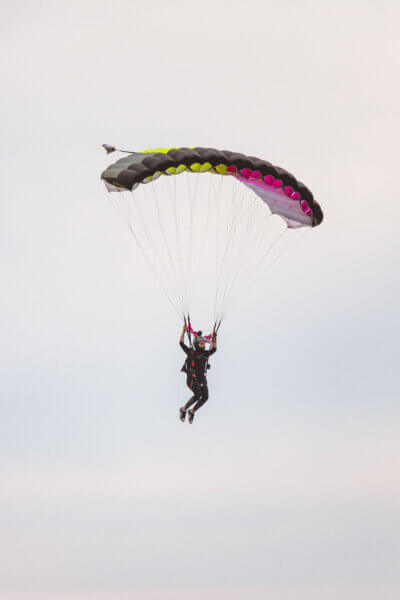
- Smooth Crossfire 3 landings.
-
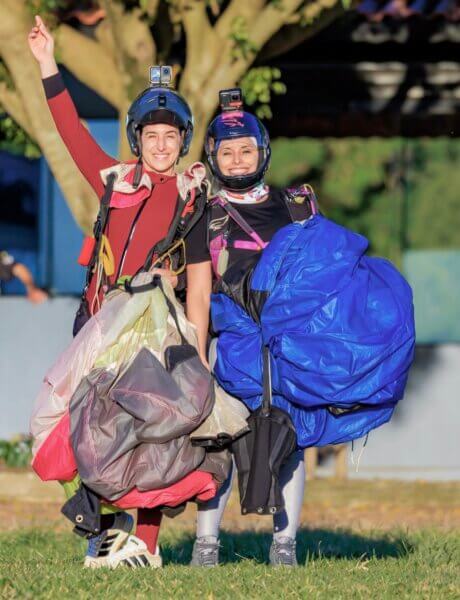
- That’s GO GIRLS energy, right there.
How does the GoGo Girls “Fun Factor” philosophy fit into that?
For me, improving and having fun should always go together. The Crossfire gives me the confidence to push my skills while still making every jump enjoyable. It’s a canopy that rewards good flying but never takes away the fun. And honestly, if you’re smiling under canopy, you’re probably learning even faster.
That confidence in the Crossfire has followed Martina all the way to competition, most recently, she flew it at Freestyle Nationals:
Competing at Nationals with a canopy I know so well gave me one less thing to worry about. I could focus entirely on my routine because I completely trusted what would happen once the parachute opened.
What would you say to lighter pilots who are nervous about moving to a Crossfire?
One thing I hear all the time is people being afraid to move from a Safire to a Crossfire because they’ve heard it’s “a big jump” or that “it gets to the ground faster.” The truth is that every pilot experiences a canopy differently. The best advice I can give is to demo one with someone experienced who knows the brand and can help you choose the right size and wing loading for your weight and experience.
If someone is considering moving from a Safire 4 to a Crossfire, what advice would you give them before making the transition?
But my biggest piece of advice is simply… do it. And don’t be afraid to ask every question that comes to mind before your first jump.
-
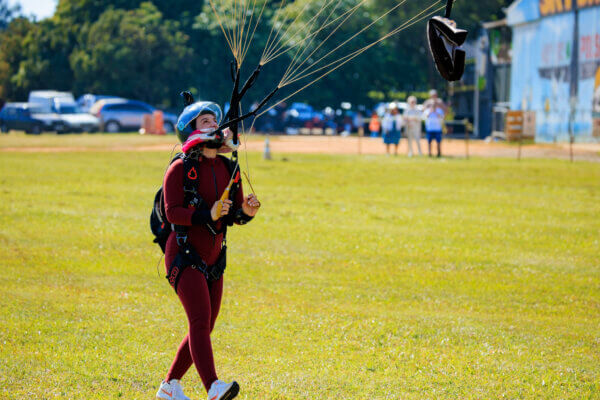
- Back on the ground at Boituva.
The Crossfire is a versatile beast. It’s perfectly capable of doing the standard landings we all learn from AFF, while also providing an incredible platform for pilots who eventually want to explore swooping.
…But liking what you feel is only half the conversation.
Are You Actually Ready for It?
MEET MAX
-
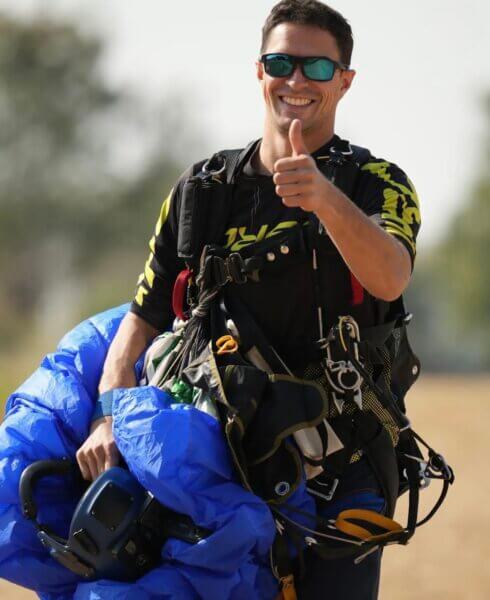
- Max Lesziak
Cue Max Lesziak. He may be our athlete, but there’s no wishy-washy marketing or canopy jargon here. He knows his shit, and breaks things down in a way that actually makes sense, because he reallyyyyy gets it. No nodding along cluelessly, pretending you understood every word when really, you were lost three sentences ago.
Skydiving instructor and self-proclaimed parachute nerd, Max flies a Petra, competed at the 2022, 2023 and 2024 FAI World Championships of Canopy Piloting, and coaches pilots through this exact transition. Ask him anything canopy-related and watch him light up… he’ll happily geek out on linesets for hours if you let him. Follow: @maxyaks
He’s a top-10 World Championship finisher who in addition to his Petra flies a Leia, Kraken and keeps his Crossfire 3 in rotation. Here’s why:
“It comes down to ease of use and versatility. Stress-free and docile handling when I want to fly slow, lots of range when I need it, and heaps of power when I want to throw down a big swoop.”
From a coach’s perspective, what do pilots usually notice first when they move to a Crossfire?
If you’re stepping up from a beginner wing, you’ll notice snappier handling in turns and increased sensitivity in the harness. In terms of building speed, you will appreciate the intuitive front riser control and the significantly increased power in the dive.
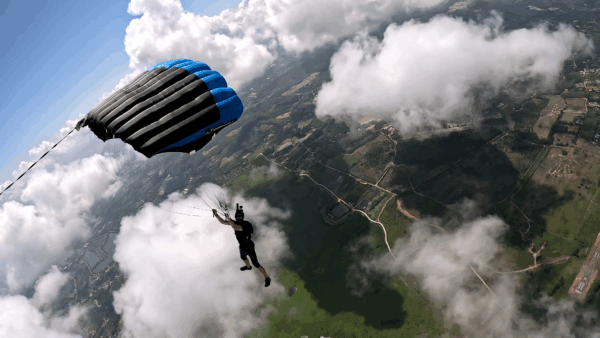

What changes when you move from a wing like a Safire 4 to a Crossfire 3:
Openings
Smooth and progressive. Quicker, not harder. Less forgiving of poor body position, but comfortable with immediate harness control and feedback, making it easy to change heading hands-free while housekeeping.
Flight characteristics
Toggle turns are more snappy and require some attention to avoid over rotation. Harness inputs are more accessible due increased roll sensitivity.
Response
Smaller inputs required to achieve the same response. Acceleration is noticeably more aggressive when maintaining any input.
Front and rear risers
Fronts are lighter and easier to manipulate. Rears feel solid but not heavy in natural flight. They become stiff with added speed, providing reliable feedback during the swoop.
Recovery arc
Significantly longer. You will notice the continued dive and acceleration through the recovery arc before levelling out.
Flare and landing
The steeper trim is noticeable as you prepare for landing. A bit more finesse is required to time the flare. Tons of bottom-end power that rewards you with soft tip landings if you manage it well.
Do certain mistakes or habits become more obvious when someone transitions from a Safire 4 to a Crossfire 3?
Absolutely. Lack of discipline during the opening sequence such as poor awareness of body position or yanking on risers unnecessarily. During deployment and throughout inflation, keeping the shoulders and hips square while remaining relaxed in the harness is an essential skill to develop and becomes increasingly important as you progress to higher performance wings.
Resist the urge to grab the risers as soon as they appear above your head. By hanging from the risers, you are giving wildly inconsistent inputs to the inflating canopy, even if you think you are not pulling on them. Let the canopy snivel and fully inflate without unnecessary inputs and instead learn to feel the subtle feedback that the canopy gives you through the harness during the opening process.
You will enjoy more consistent openings and with enough practice, you will know when the canopy wants to go one way or the other and you’ll be able to go with it, avoiding nasty line twists. Building this habit early will do wonders for your progression.
-
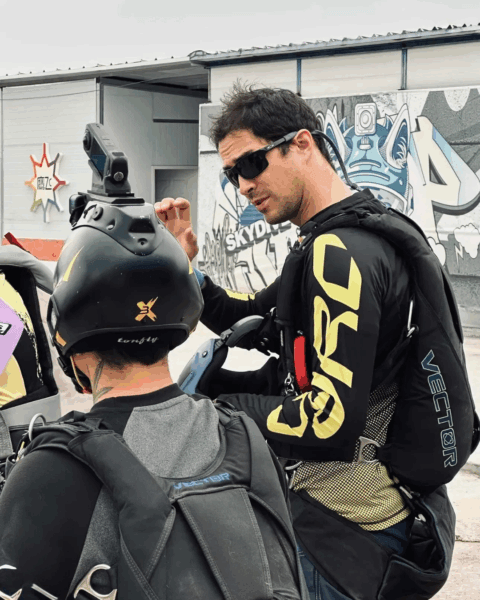
- Coaching in China, 2025.
-
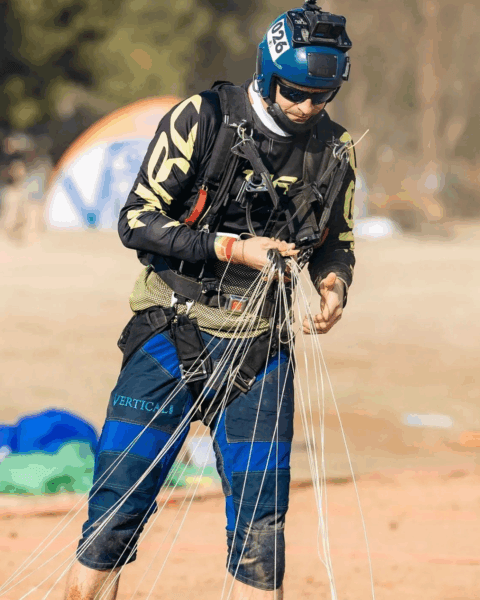
- Canopy Nationals, South Africa, 2025.
Does 500 jumps mean you’re ready for a Crossfire 3?
JYRO recommends a minimum of 500 jumps, but to be clear, this does not mean that anyone with 500 jumps should fly a Crossfire 3.
There is a huge difference between 500 canopy rides down after a skydive versus a structured canopy progression with clear intentions, deliberate practice of drills and manoeuvres, coupled with close supervision and consistent feedback from coaches.
Consider as well that everyone learns at a different pace and many skydivers don’t have the luxury of staying current and jumping all year long. Remember that 500 is just a number, and it is a minimum at that. The Crossfire3 is a very capable canopy that will bite if you are not ready.
Some of the most common reasons skydivers give for wanting to switch to a higher-performance canopy are “I want to go faster!” or “I’m bored of my canopy”. Give your “slow” and “boring” canopy to an elite canopy pilot and you’ll see that even your Safire, Sabre or Pilot can do some incredible things and swoop much faster and farther than you thought possible.
Take the time to really learn your wing. Get comfortable maneuvering around in deep brakes right on the edge of stall, using rear risers in flight and for landing, adding speed with front risers, and of course be able to land where you want, every time. If landing in a strong crosswind makes you nervous, you’re not ready for a higher performance canopy. It is also crucial that you develop the skills and confidence to land downwind in a controlled environment (the DZ) before you are forced to do it into unfamiliar territory with obstacles (off landing).
Better yet, speak with an experienced canopy pilot at your dz to mentor you through the exercises or hire a professional coach for a couple of days of personalised guidance.
Being ready comes down to confidence, competence and comfort on your current wing in all conditions. Learning advanced maneuvers on a beginner wing will set your baseline skill level high enough to comfortably handle basic manoeuvres on a more advanced wing. The transition should not catch you off guard – but rather feel effortless. Exciting, but not scary.
How do you fly safely and respectfully around other canopies?
Flying your canopy in close proximity to others is an amazing way to truly understand how your canopy responds to different inputs, but after a freefly jump from a packed otter load is not the time to learn that.
Do a bunch of 2-way high pulls dedicated to learning how to fly with your friends. Always check the upper winds all the way from surface to exit altitude and make a solid navigation plan so you make it back to the dz. Brief a canopy dive flow just like you would for a freefall jump so you both know what to expect and fly predictably with smooth inputs. Stick to the plan and be strict with a break-off altitude that you are both comfortable with.
Once you have a solid foundation, it’s perfectly fine to say hi to your buddy under canopy – but always have a conversation about it before the jump! If they don’t know you’re coming, that’s an accident waiting to happen. Are they comfortable with it? Contact or no contact? Have fun, but be responsible. Navigation and managing traffic should always be your number one priority.
Never buzz a stranger without asking – they may not be comfortable with close proximity to other canopies and you don’t want to startle them!
Know your limits. A canopy wrap on a high pull with the sky to yourselves is one thing – getting tangled with your buddy in a packed sky close to pattern altitude can lead to disaster.
Here’s what that looks like done right, when a Crossfire 3 and Sabre 3 play midair:
View this post on Instagram
.
FAQ: What People Ask About the Crossfire 3
“What’s the recovery arc like? I’ve heard Crossfires recover instantly”
The Crossfire3 has a significantly longer recovery arc than its predecessors, so you will be pleasantly surprised if you are comparing it to CF1 or CF2. JYRO’s redesign makes Crossfire3 a much more suitable stepping stone towards modern high performance wings with longer recovery arcs.
“Is it crossbraced? The name makes it sound like it should be”
Crossbracing adds diagonal ribs to the standard construction of a canopy’s cells turning them into three-chambered cells instead of the standard two. This increases performance in a variety of ways. The Crossfire3 has standard two-chambered cells with no crossbracing. Perhaps the partly closed inlet design makes it look like some crossbraced canopies. The word “cross” in the name is just a coincidence.
What wingload do you need?
At light wingloadings of 1.0 to 1.4, the Crossfire 3 is suitable as a first or second medium tapered 9-cell for confident intermediate jumpers stepping it up from their Safire. At 1.5 and above, she’s a different animal, favoured by pilots already flying smaller, higher-loaded tapered 9-cells who want more performance to play with
Max backs this up: “You’ll find plenty of range at higher wingloadings (1.5-2.0).”
Not sure where you sit? Run your numbers through our Wing Loading Calculator.
“Is it fast? How does it swoop?”
You can make any canopy go fast and there are plenty of examples where a well-trained pilot can outswoop someone on a higher-performance wing who rushed their
progression. With the Crossfire3, you get a brand new design using the same modern engineering tools that were used to develop Petra and Leia.
“Is it really THAT good?”
YES, try it.
-
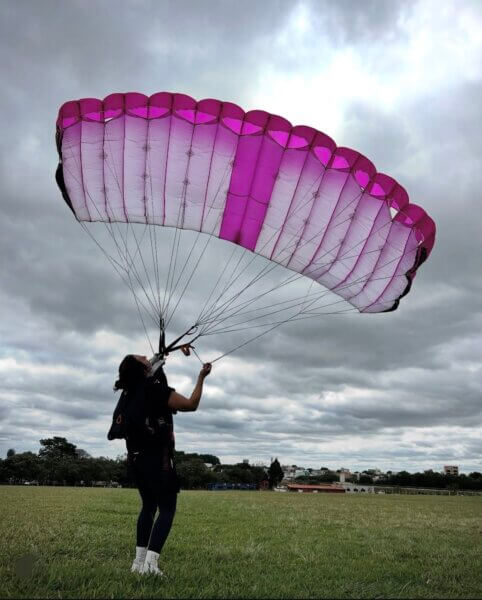
- You’ll never go back
Demo a Crossfire 3
Curious? Get one over your head. Feel the difference for yourself.
Not sure whether you’re ready? Talk to us / your canopy coach.
Read More
From Student Gear to Your First Sport Canopy: What Actually Changes?
The Canopy Progression Chart: Fly the JYRO Range
SAFIRE 4 Review: What People Are Saying
Crossfire 3 Review: The Art of Having Fun
Downsizing Checklist for Skydivers