So you’ve got your A licence, and you’re all frothed up with that fresh skydiver energy. Now it’s time to start looking for your first sport canopy. This is it!
…but suddenly you’re standing on the packing mat, listening to fifteen different opinions and wondering what the fuck actually happens next.
Will it feel completely different?
Will it be harder to fly?
Will you suddenly need to become some kind of canopy ninja?
For many skydivers, that first sport canopy is the Safire 4. But what actually changes when you move from a student canopy to a Safire 4…and is it the right next step?
So we spoke to three people who have experienced all sides of the journey: a new jumper who recently made the switch, a Chief Instructor, and an experienced Safire 4 pilot to find out what actually changes when you make the move.
Here’s what they had to say….
Key Takeaways
- The Safire 4 is designed to bridge the gap between student and sport canopies
- Most jumpers notice increased flare power first.
- The canopy feels more responsive without becoming intimidating.
- Strong openings and predictable landings build confidence.
- Coaching and canopy progression matter more than jump numbers alone.
The Safire 4
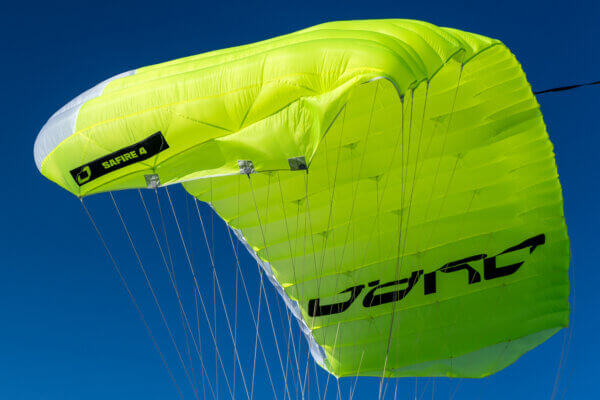
For many jumpers, that next step ends up being the Safire 4. It’s designed to bridge the gap between student equipment and more responsive sport canopies.
-
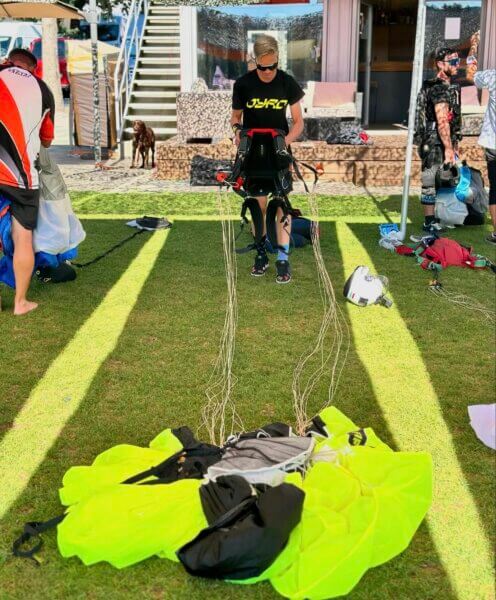
- The move to your first sport canopy is one you’ll never forget.
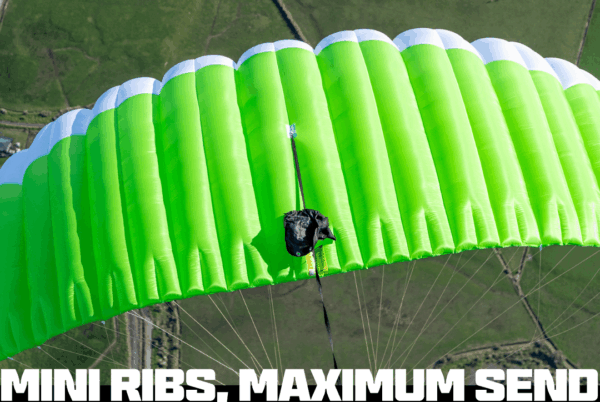
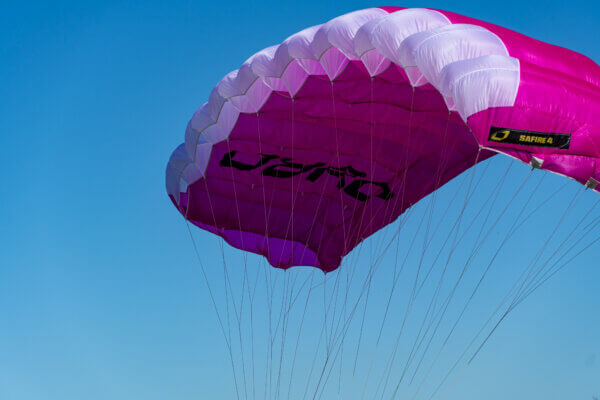
The Safire 4 is the canopy that often marks a shift – no more borrowing, renting or daydreaming. You’re investing into your own journey, it’s your initiation into the world of sport skydiving. The Safire 4 offers stronger flare power, more responsive handling and a greater sense of canopy feedback, while remaining predictable enough to keep newer licensed jumpers smiling.
Where Does the Safire 4 Fit in Your Canopy Progression?
Canopy progression isn’t a race, it’s the process of matching your canopy to your skills as they develop. There comes a point where you’re ready to move beyond student gear and start flying something that’s a little more responsive, a little more rewarding, and a lot more fun. The Safire 4 sits right at that turning point. View the full JYRO Canopy Progression Chart → And while you’re at it, check out theJYRO Canopy Progression Chart →
No two skydivers follow exactly the same path. Ask ten jumpers, and you’ll probably get ten different answers. Here’s why these three kept coming back to the Safire 4….
Sophie’s Story: Moving Beyond Student Gear
Sophie had around 270 jumps when she made the move from a JYRO Air to a Safire 4.
MEET SOPHIE
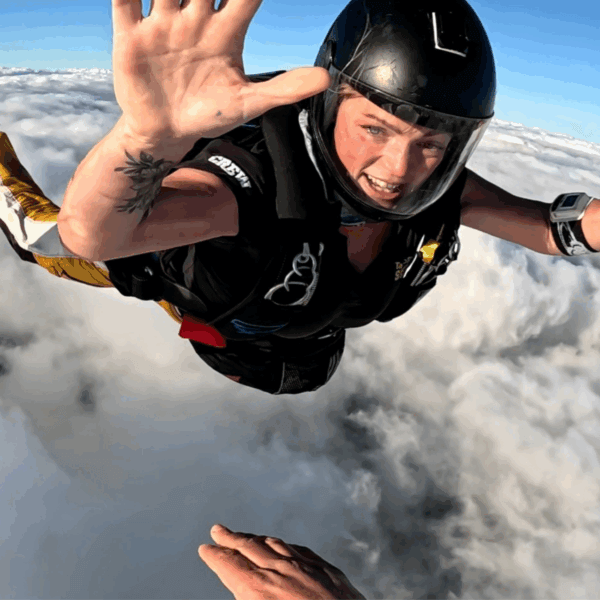
Safire 4 size: 190
Previous canopy: JYRO Air 189
Wing loading: 0.9 → 1.0
Jump number: 270 jumps
Home DZ: Taupō Skydivers
We asked her what the transition actually felt like from the perspective of someone who’d just been through it.
Why Sophie Made The Switch
Before switching, Sophie was doing around 5-10 jumps a week and looking for the next step in her progression towards camera flying.
“I spoke to experienced people in the DZ and then waited for a day with wind conditions between 5-10 knots before jumping it for the first time.”
Good canopy progression rarely comes from chasing the next thing. Sophie didn’t rush it. She asked questions, waited for good conditions and jumped with a clear plan.
Sophie’s First Jump on a Safire 4
“The first thing I noticed when jumping the Safire 4 was it had a stronger flare than anything I had used before.”
When a canopy gives you a little more lift and a bit more to work with before your feet touch the ground, that’s where many jumpers first notice the difference in flare.
-
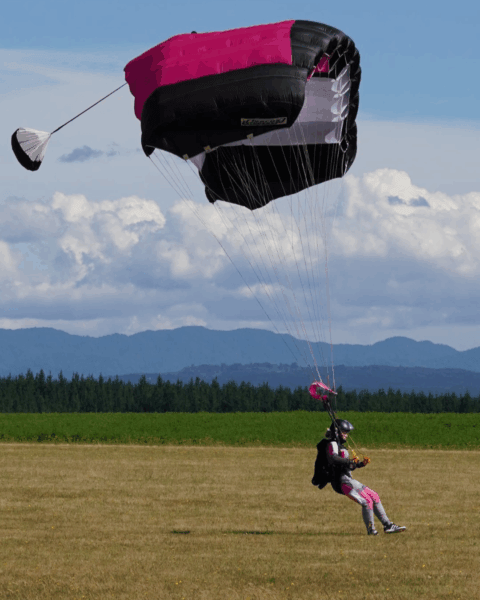
- Sophie making progression on the Safire 4.
What Changed Compared to the Air?
“I didn’t notice a big difference in control inputs. All the openings were fairly consistent and nice.”
Sophie describes a collection of small improvements. Skydiving can be information overload, and baby steps are okay! The goal isn’t to scare the shit out of you, it’s to grow with you.
Why Confidence Matters During Canopy Progression
“I saw a massive improvement on my landings from the first jump on it and have only felt more and more confident on it as I’ve carried on with it.”
Confidence gets thrown around a lot in skydiving. Managing confidence is a skill in itself – too little and you’ll hesitate when you shouldn’t. But confidence isn’t just about trusting yourself, it’s also about trusting what’s above your head. And that kind of trust comes from seeing the same thing happen jump after jump:
- Predictable openings
- Predictable flight.
- Predictable landings.
Mason’s Perspective: What Instructors See
Sophie can tell us what the transition felt like. However, it’s one thing to jump a canopy yourself. It’s another thing entirely to stand on the ground and watch hundreds of people learn to fly it. Mason has watched hundreds of jumpers make the same progression.
MEET MASON
As Chief Instructor at Taupō Sport Skydivers, he’s seen exactly where the Safire 4 fits into a sport jumper’s journey.
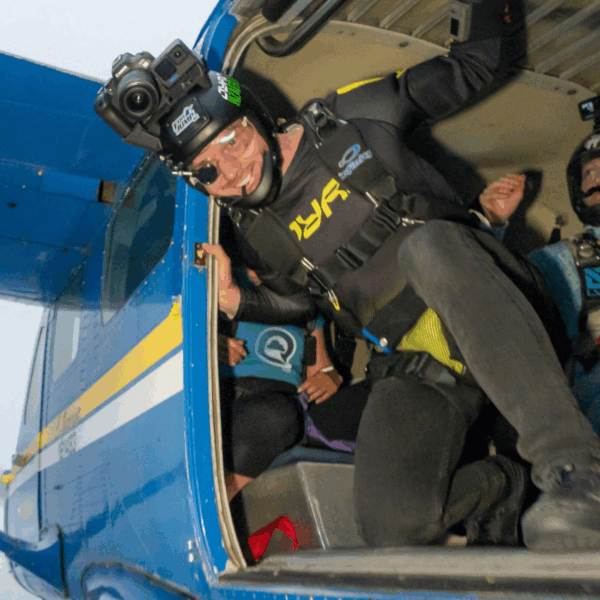
Home DZ: Taupo Sport Skydivers
Jump number: 9,800 jumps
IG: @masondholden
“The Safire 4 bridges the gap from a student canopy to things like a Crossfire perfectly. The inputs become more responsive, and it really feels possible to start piloting the wing rather than that feeling of sitting under a student canopy. For pilots who want to fly a fun responsive wing without the constant stress of something more performance-oriented, the Safire 4 feels like the perfect step.”
What Instructors Notice
Taupō’s Skydiver fleet already uses JYRO Air canopies, which means the jump from student gear to Safire 4 isn’t as dramatic as it might have been a decade ago. If you’re curious about the student canopy many jumpers are progressing from, check out Mason and Liz Holden’s breakdown of the JYRO Air.
“All these modern canopies have great flight characteristics and really impressive flare power. The Safire 4 is no different; however, the feedback from our sporties saying they enjoy flying it more than the Air is constant. Some can’t explain why, but it’s definitely a pattern.”
A student doesn’t move on from student gear because they’ve hit a magic jump number. They move on because they’ve grown. Skills become habits, and situations that once felt overwhelming become familiar. That’s when canopy flight starts becoming something you genuinely look forward to, not just the thing that gets you back to the ground.
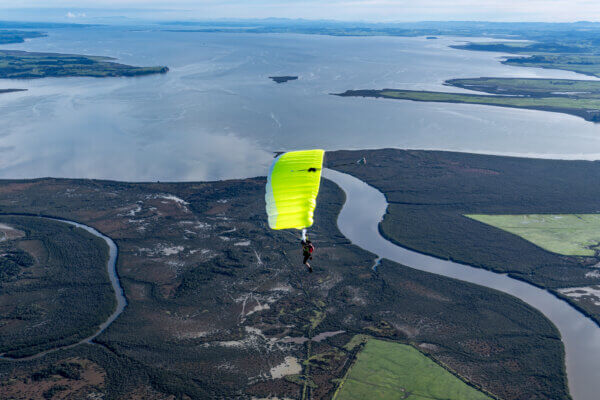
-

- Safire 4 flying over Lake Taupō.

Is the Safire 4 a Good First Canopy?
“Absolutely. Not only for newer jumpers buying their first canopy, but also for jumpers who have:
- Had a break from the sport
- Lost currency
- Slowed down their flying goals
- Want something fun without extra stress
Keeping a canopy playful while keeping it predictable and stress-free, it’s a perfect choice for lots of people.”
Máté’s Perspective: One Year Flying a Safire 4
First impressions are one thing. A year later is a whole other story.
MEET MÁTÉ
Máté Feith is a Hungarian skydiver, wind tunnel athlete and JYRO athlete. A former Safire 3 pilot, he’s spent the past year flying the Safire 4 in competitions, at training camps and on everyday fun jumps. That gives him a deeper insight into how the canopy performs well beyond those first few jumps.
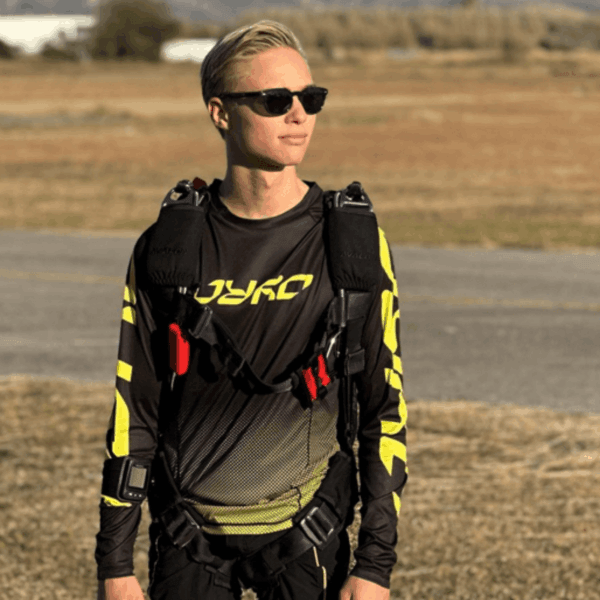
Safire 4 Size: 119
Previous canopy: Safire 3 139
Wing Loading: 1.33
IG: @feithmate
Home DZ: Skydivecentrum, Dunaújváros Airfield
“The Safire 4 kept the confident, safe characteristics I already trusted, while adding a stronger flare and a more refined feel in flight. I love the Safire 4’s comfortable openings, predictable flight characteristics and powerful flare. I feel like JYRO kept everything that made the Safire 3 popular and improved the wing’s overall performance while keeping its friendly nature.”
Watch Máté’s first impressions of the Safire 4:
How Does the Safire 4 Fly Day-to-Day?
Here’s what Máté said:
- Consistently soft and comfortable openings
- Predictable handling
- Very good glide performance
- Strong rear-riser authority when needed
- Powerful and forgiving flare
- Easy traffic management in busy landing areas
- Well-suited for boogies, camps, camera jumps and everyday fun jumps
- A canopy that feels efficient without being demanding
-
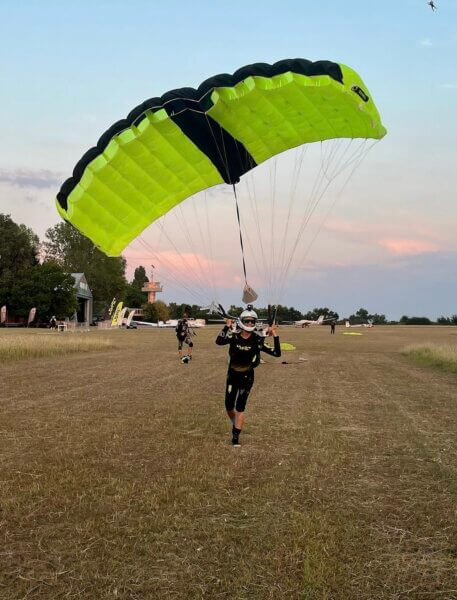
- Safire 4 looking lush on landing
-
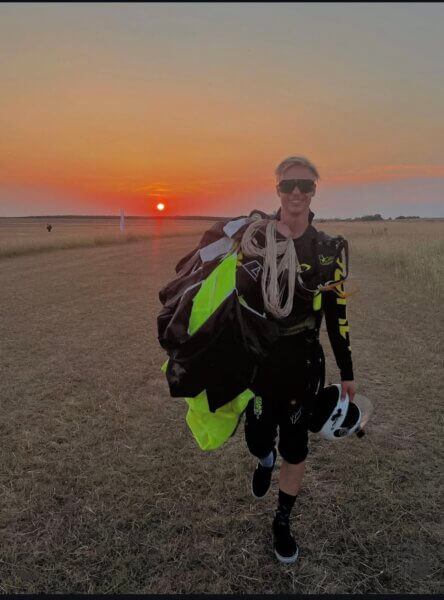
- Post Sunset Load Stoke with the Safire 4 in Swing
Stepping Stone or Long-Term Wing?
When asked whether he sees the Safire 4 as a stepping stone or a long-term wing, Máté’s answer was:
“I see it as more of a stepping-stone canopy. Many jumpers can enjoy it for the long term, since it offers enough performance to stay interesting, while remaining comfortable and forgiving.”
Would You Choose It Again?
“Absolutely! Coming from the Safire 3, I was looking for an evolution rather than a completely different experience. The Safire 4 delivered exactly that, preserving the qualities I already loved while adding a more refined feel and stronger flare performance”
So What Actually Changes?
After talking to a newer jumper, a Chief Instructor and an experienced Safire pilot, one theme kept coming up in all three conversations.
For Sophie, it shows up as better landings and growing confidence.
For Mason, it shows up in the jumpers he watches progressing every season.
For Máté, it’s a canopy that he still enjoys flying long after the novelty had worn off.
Three different people, with remarkably similar answers. And the answer is probably less dramatic than most people expect: It should feel familiar. A little more responsive, a little more engaging, a little more rewarding.
Moving from student gear to your first sport canopy shouldn’t feel like starting over. It should feel like the next chapter.
FAQs
Is the Safire 4 a good first canopy after AFF?
For many jumpers, yes. It was specifically designed to bridge the gap between student gear and more advanced sport canopies.
Should I downsize when moving to a Safire 4?
Not always. Many jumpers benefit more from changing canopy models than from changing canopy size.
Read: When to Downsize Your Skydiving Canopy and When Not To.
What is the biggest difference between an Air and a Safire 4?
Most jumpers report increased flare power, greater responsiveness and a stronger feeling of connection to the wing.
WHAT’S NEXT?
The Canopy Progression Chart: Fly the JYRO Range
If I was a beginner Skydiver Again
Parachute Buyer’s Guide: Choosing the Right Canopy
Safire 4 Review: What People Are Saying
Safire 3 v.s Sabre 3: A Canopy Comparison Guide